How to Organize Family Photos Without Losing Context
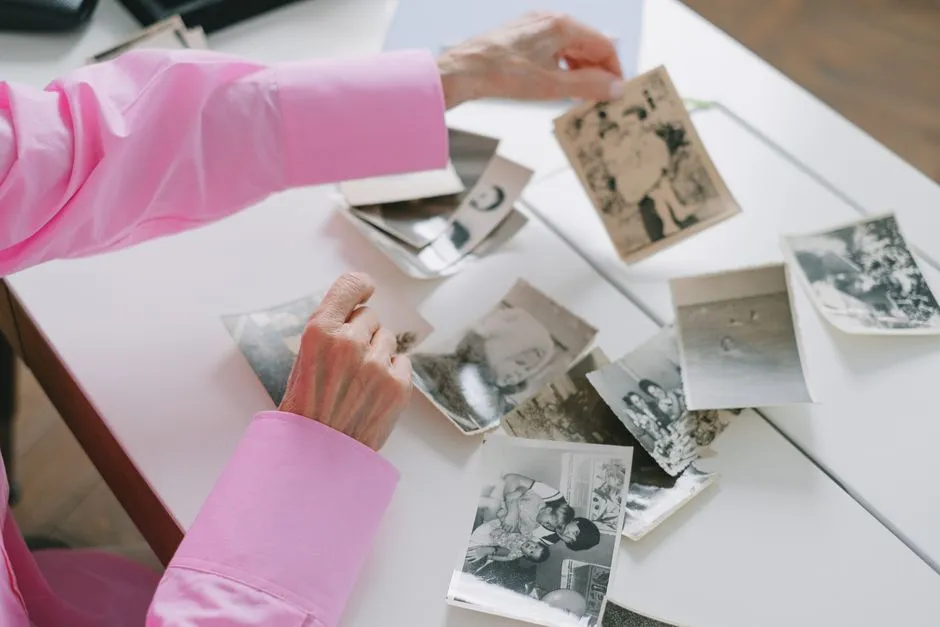
Sort by broad groups before chasing exact dates
To organize family photos, first separate obvious formats and broad family branches or time periods. Keep each photo with any envelope, album page, or written note that gives it context. Then create a simple identifier, write what is known and uncertain in a separate record, and make backup copies of scans. Do not begin by pulling every photograph into one magnificent, untraceable heap.
The aim is a system another person can understand. More guides for building one live in family archives.
Preserve the clues already attached
Before sorting, photograph album pages, box labels, envelope fronts, and existing arrangements. Sequence can carry information: a group of prints may share an event, a roll of film, or a sender even when no image is labeled.
Work with clean, dry hands on a clear surface away from food and drinks. Handle prints by their edges when practical. If an album or photograph is brittle, stuck, moldy, unusually valuable, or culturally sensitive, stop experimenting and ask an appropriate conservator or responsible community authority for guidance.
Never force a print out of an album or peel apart photographs that resist. “It almost came free” is how a preservation project becomes a before-and-after picture with only a before.
Make four temporary sorting zones
Use clean boxes or folders for:
- identified people or events;
- likely family branch or household;
- approximate era or place;
- unknown.
A photograph can begin in the unknown group without failing anything. Write down the reason for a tentative placement: “same porch as envelope 14” is more useful than “probably 1940s?” floating alone.
Avoid writing on original prints unless a qualified preservation method supports it. Put notes in an archival-quality enclosure or in a separate index linked by an identifier. Ordinary sticky notes can detach, migrate, or leave adhesive behind.
Give every item a plain identifier
Choose a code that does not depend on knowing who appears in the picture. For example, BOX02-ENV05-IMG003 identifies a location and sequence without pretending to know the subject.
Record the code in a spreadsheet or notebook with fields such as:
- current physical location;
- names exactly as supplied;
- event or place;
- approximate date and basis for that estimate;
- person who supplied the information;
- uncertainty or conflicting identifications;
- scan filename and backup status.
Keep “confirmed,” “reported by,” and “inferred” distinct. A relative’s confident identification is valuable evidence, but it is still useful to record who made it and when.
Scan without discarding the original
Scanning creates an access copy; it does not automatically replace the physical photograph. Save a high-quality master file in a widely supported format and make smaller copies for sharing. Preserve the unedited master, even when you crop or adjust a derivative.
Use the item identifier in the filename, such as BOX02-ENV05-IMG003_master.tif. Avoid filenames like grandma-final-REAL2, which feel expressive until six people named Grandma enter the archive.
Store copies in more than one place, with at least one copy separate from the main device. Periodically confirm that files open and that folder names still make sense. A backup you have never checked is a hopeful rumor.
Ask people while the image is visible
When seeking identifications, show one photograph at a time and ask open questions: “What do you notice?” or “What makes you think this was taken there?” Record exact uncertainty instead of pressuring agreement.
With permission, a short conversation can preserve pronunciation, relationships, and anecdotes that a caption cannot hold. The family history interview prompts provide a consent-first structure, and the oral-history section covers the listening side of the archive.
Finish one box before expanding
Return organized items to labeled enclosures in their recorded order. Keep a short “next actions” list for unidentified people, duplicate scans, or conservation questions.
Do not reorganize the whole family collection every time you learn one new name. Update the index, preserve the source of the new information, and let the identifier remain stable. A modest system that survives new discoveries is more useful than a perfect taxonomy that requires annual constitutional reform.